
Home & commercial generators
Generator installationDone right.
One specialist. Install to service.
Standby generators for homes and businesses,
sized from a load calculation and priced line by line.
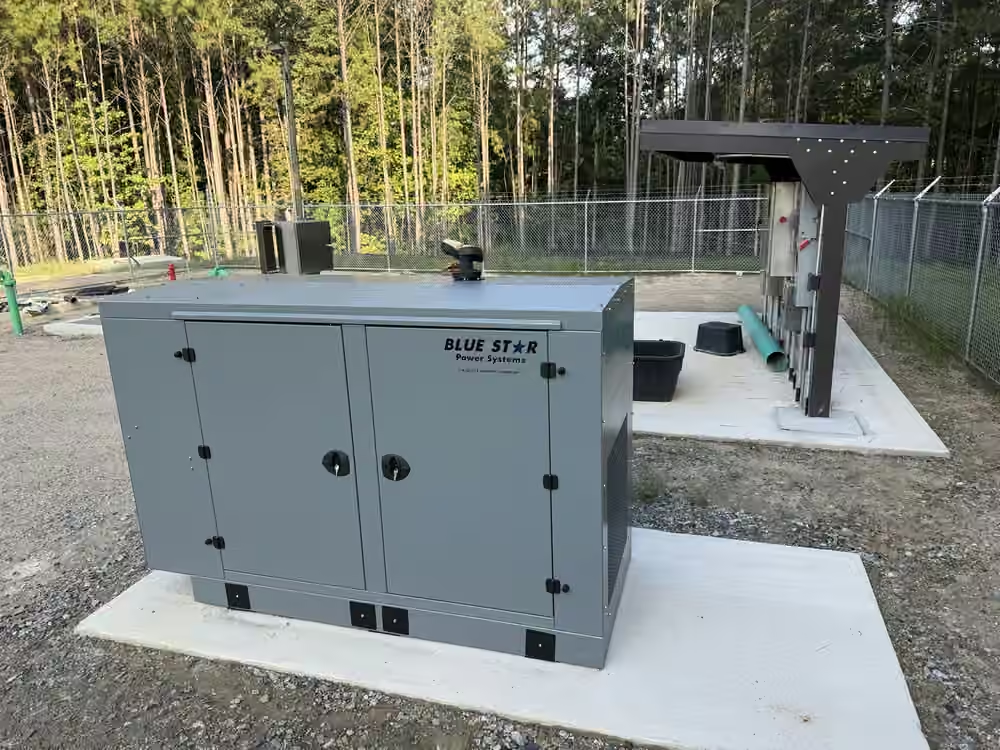
Natural gas / Propane / Diesel
Install. Service. Repair.
In short
What a generator installation includes.
Generator Install Co. sizes your generator from a load calculation, sends one itemized price, and assigns a select licensed contractor in your area who installs it and services it after. A home install is usually 1 to 3 days on site, covering the generator, automatic transfer switch, pad, gas or propane line, permits and startup.
How the network works
One company to deal with. One specialist on your job, from install to every service call after.
Most homeowners get three quotes from three companies that each do a little of everything. We work the other way. We do the sizing, pricing, permits and scheduling, and we put a single contractor on your project who specializes in generators and runs their own service department.
Your request goes to one contractor, not a list. If nobody in the network covers your ZIP code yet, we tell you that instead of selling your number.
Every contractor we use
Licensed where you live
State electrical license, and gas or LP licensing where the state requires it. License numbers go on your proposal.
Generator specialists
Generators and transfer switches are their core work, not a side line for a general electrician.
Trained on what they install
Manufacturer training or authorization for the equipment on your proposal, so the warranty is registered correctly.
Their own service department
Technicians who do maintenance and repair, so the crew that installs it is the one you call after.
Insured and inspected
General liability and workers' comp on file, permits pulled under their license, inspections passed before startup.
What we do
Pick the job that matches yours.
Home standby generators
Whole-home or essential circuits on natural gas or propane, with the transfer switch, pad, gas line and permits included.
Home installation → 30 kW to multi-MW · diesel and gasCommercial and industrial
Offices, retail, medical, water and wastewater, telecom and data. NEC 700/701/702 and NFPA 110 work.
Commercial installation → 100–4000 A · ATS and manualTransfer switches
Service-rated ATS with load management, manual switches and interlocks for portables.
Transfer switches → Annual service · repair · testingMaintenance and repair
Yearly service, repairs, battery and load testing, and NFPA 110 records for commercial sites.
Generator service →How it's wired
Your generator is only as good as its transfer switch.
The generator makes power. The transfer switch decides when your house gets it, keeps it from backfeeding the utility lines, and sheds big loads so a right-sized unit can carry the whole home. Most bad installs are a fine generator on a poorly chosen switch.
That's why every proposal names the switch: amperage, whether it's service-rated, and which loads it manages. Here's what one does in an outage.
- Utility
- 0 V
- Generator
- 241 V · 60.0 Hz
- Load on
- Generator
Outage. Your house has been on the generator for 10 seconds.
From first call to running generator
Five steps, and you see the price before any of them costs you anything.
The proposal is free. You pay nothing until you've signed a proposal with the scope and your contractor named on it.
Load review and site check
We start from your panel schedule, AC tonnage, fuel and photos of the meter, panel and yard. That tells us the kW size, the transfer switch type and where the unit can legally sit.
Itemized proposal
One price, broken out: generator, transfer switch, pad, electrical, gas or propane piping, permits, startup. The installing contractor and license numbers are on it.
Permits and utility coordination
Electrical and mechanical permits are pulled, and the gas utility is asked to confirm the meter can carry the added load. This step sets the calendar more than anything else.
Install day
Pad set, unit placed, transfer switch and conduit run, gas or propane line piped and pressure tested. Most homes are 1 to 3 days on site.
Inspection, startup and walkthrough
The inspector signs off, the unit is started and run under load, the weekly exercise is set, and you see a real outage test before we leave.
Straight answers
What people ask first
How much does it cost to install a whole-home generator?
HomeAdvisor's 2026 data puts a 20 to 24 kW unit at $5,000 to $6,500 for the equipment, with installation labor of $1,500 to $5,000 on top, plus permits, a pad and fuel piping (HomeAdvisor, updated June 19, 2026). Larger whole-home units (26 to 48 kW) run $6,500 to $21,000 for the equipment alone. Your number depends mostly on generator size, the distance from the unit to the gas meter and electrical panel, and whether the gas meter or electrical service needs an upgrade.
What size generator do I need for my house?
Most single-AC homes of 2,000 to 3,000 square feet land at 20 to 26 kW when the AC and large appliances are load-managed. Two AC systems, a heat pump with electric backup strips, or an all-electric house push it into the 26 to 48 kW range. A load calculation from your panel and AC nameplates decides it. Our sizing calculator gives a starting range.
How long does a generator installation take?
The on-site work for a home standby generator is usually 1 to 3 days. The calendar time from signed proposal to running generator is typically several weeks, set by permit review, the gas utility confirming or upgrading the meter, equipment availability and the inspection date. Your proposal comes with a dated schedule.
Who actually installs and services the generator?
A select contractor in our network who specializes in generators: licensed in your state, insured, trained on the equipment they install, and running their own service department. Generator Install Co. handles the sizing, the itemized proposal, permits and scheduling. Your contractor and their license numbers are on the proposal before you sign, and the same contractor services the unit after startup. If we don't have a contractor covering your ZIP code yet, we tell you up front instead of passing your information around.